

Wild birds rewrite rules for travel: Soaring on thermals can be the most energy-efficient mode of transport for animals
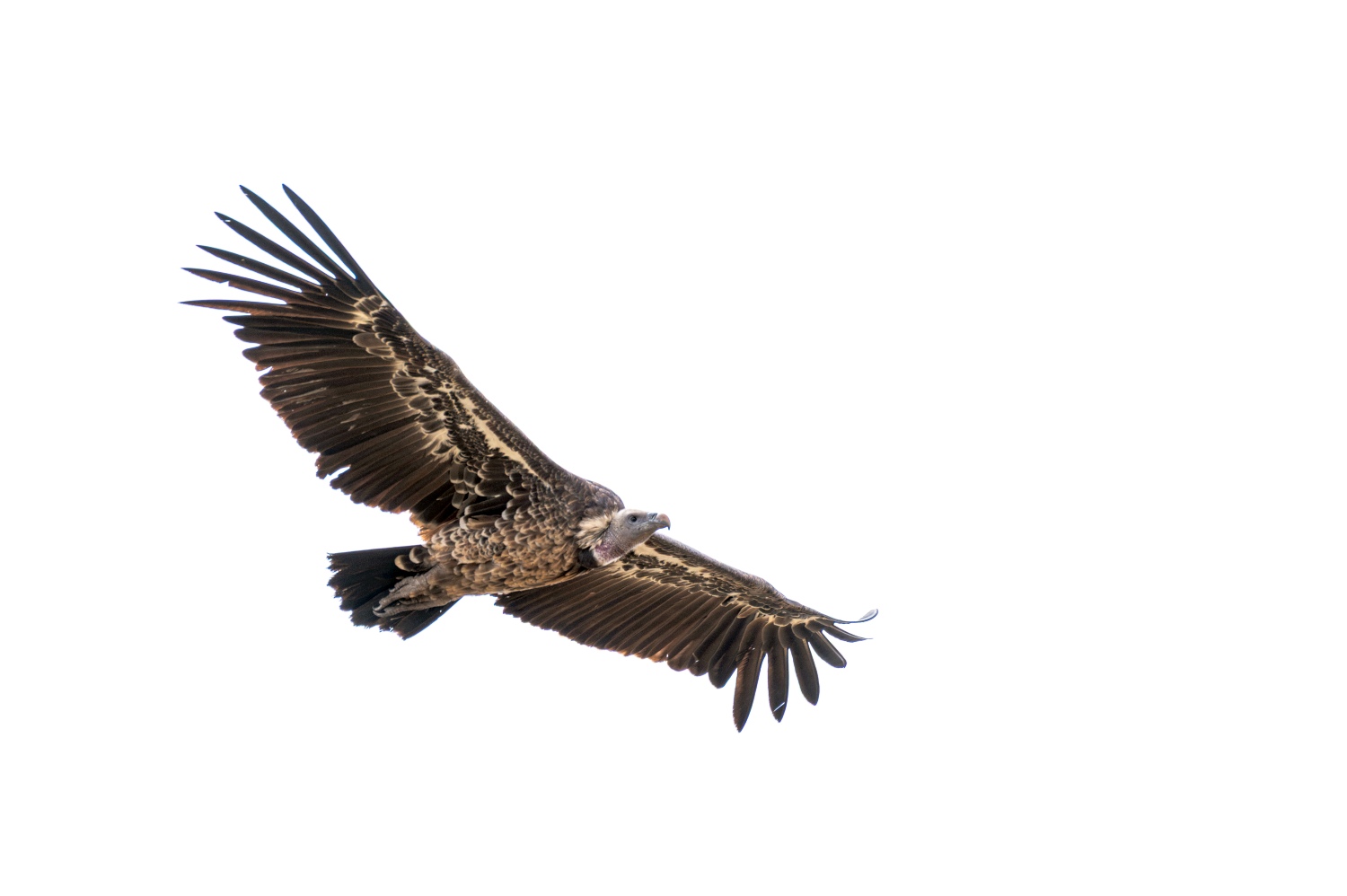
The largest study yet to examine flight costs in wild birds finds that riding the air can make flying energetically cheaper than swimming, overturning a textbook ranking. Published in Science, the work led by scientists from the Max Planck Institute of Animal Behavior and the Swansea University combines 17 years of position and accelerometer tracking data from 850 birds and bats of 38 species with four years of radar data. For soaring birds such as vultures the air is not a neutral medium, but is skilfully utilised to minimise energy consumption whilst flying.
An Andean condor and a trumpeter swan both weigh about 11 kilograms. Yet the condor covers each kilometre of flight for about a fifth of the swan’s energy bill. The difference is the air: the condor rides rising currents and flaps for 0.1% of its flight time, while the swan flaps for 99%. A new study of 50 bird and bat species in the wild showed that once the atmosphere is considered, flying can be the cheapest form of travel.
Published in Science, the work led by scientists from the Max Planck Institute of Animal Behavior (MPI-AB) and Swansea University is the largest study yet to examine the cost of long-distance travel for wild animals. It combines 17 years of position and accelerometer tracking (GPS and ACC data) from 850 birds and bats of 38 species with four years of radar data covering 12 size classes of smaller flyers. The animals range in size from about 12 grams to more than 11 kilograms. An international team of 68 scientists contributed data to the project, among them Dr Ortwin Aschenborn and Dr Teja Curk from the GAIA Initiative at the Leibniz Institute for Zoo and Wildlife Research (Leibniz-IZW).
“To us, the sky might just look like background for flying animals, but it is an essential resource that can dramatically change the cost of a journey”, says first author Dr Martina Scacco, postdoctoral scientist at the Swiss Federal Institute (WSL). Textbooks rank the ways animals travel by cost: swimming is the cheapest, flying comes next, and running is the most expensive. That ranking comes from laboratory measurements of animals in swim tanks, in flight tunnels, and on treadmills. Outside the lab, the study found that this ranking changes.
“The laboratory rules tell us that condors and swans must have the same energy bill because they have the same body mass. Yet seeing how condors soar and swans flap, we know that clearly there must be a difference”, says senior author Prof. Emily Shepard from Swansea University. The study put a price on that difference: the condor’s cost of transport was 79% lower than the swan’s, making soaring flight cheaper than swimming. "When flying animals have access to natural atmospheric flows, they have free fuel from the sky. This study exposes the mistakes we make when we ignore the real-world conditions that animals have been responding to for millennia,” adds Shepard.
Measuring cost of transport in the wild
The study is the first to factor in the role of atmosphere in the movement of so many wild animals at a global scale, offering a key to conservation and management of aerial species. “If atmospheric conditions change, so too will the cost of flight, and therefore how animals decide to migrate and establish communities”, says senior author Dr Kamran Safi from Max Planck Institute of Animal Behavior (MPI-AB). The findings offer a new framework for predicting the energetic cost of flight, and how climatic changes might affect where and when animals travel in the future.
The team used accelerometers to tell apart high-cost flapping from low-cost soaring. With GPS data, they matched each stretch of flight with the wind and rising air the animals met on the way. This enabled them to calculate the time individual animals spent flapping or soaring along a stretch of flight, and to approximate how much energy they spent per meter travelled—their cost of transport.
“We boiled the differences down to fuel economy, nature’s equivalent of miles per gallon”, says Scacco. This allowed the scientists to compare transport costs across species and flight modes, “like we compare freight costs of sea mail or air mail,” she adds. Indeed, when compared, the 50 species fell into two main groups: soarers and flappers. Among the soaring birds, size had a marked effect on transport cost: the heavier a soaring bird, the less it flapped and therefore the lower its cost of transport.
How to fly a hundred laps of the planet
Soaring vultures offer a vivid example. The seven vulture species in the study, among them white-backed vultures (Gyps africanus), flew for a combined 128,000 days and more than 4.3 million kilometres, enough to circle the planet more than 100 times. Remarkably, they achieved that while flapping only 0.1% to 7% of flight time. And the heaviest vultures, the Andean condors (Vultur gryphus), flapped least of all. They did this by exploiting atmospheric energy. Soaring birds rode rising columns of air (thermals), which lowered their cost of transport the most, “like us riding the elevator to the top floor”, says Shepard. “Soarers are masters at extracting energy from the environment. When conditions are right, they can drive their costs down to very little.” But conditions are not always right. The larger the soaring bird, the more restricted they were in terms of when and where they could fly.
Costly, but flexible flight
Flapping birds, on the other hand, use high-energy movement to cope with more variable conditions. Wind had the most significant effect on their transport costs, with tailwinds providing support and headwinds presenting resistance. Says Safi: “Air can drive flight costs up as well as down for flappers. What surprised us was just how much flappers operate in costly conditions where their fuel economy is really low. We hope that our framework will drive further investigations of the different trade-offs these two groups face, and of potential energy saving mechanisms we might still be missing.” In future work, the authors aim to build on their findings by measuring animals’ energy use directly, such as through heart rate monitoring. Doing so will capture differences in individual physiology, providing an even more realistic measure of the energetic cost of flight.
GPS and ACC tracking reveals that for soaring birds the air is a highly variable medium
“It is fantastic to have contributed to this major collaboration and to the exciting findings published in Science”, says Dr Ortwin Aschenborn, head of the GAIA Initiative at the Leibniz-IZW and co-author of the paper. The GAIA Initiative focuses on detecting carcasses in arid environments, where careful energy use is essential. Namibia, the study’s main focus, is resource-poor, requiring animals to use limited resources sparingly and efficiently, which for example white-backed vultures excel at. The data and analysis reveal how effectively—and how differently—animals can exploit these resources by using air as a transport medium. “To ground-bound humans, air may seem homogeneous, but the findings show that flying animals encounter a highly variable medium that, when used skilfully, can greatly reduce the energetic cost of travel”, says Aschenborn further.
“It is a real privilege to be part of such an important study and international collaboration, bringing together scientists and tracking data from across the world to advance our understanding of how animals fly and use energy in the wild”, says Dr Teja Curk, scientist and co-author from the GAIA Initiative. “What makes this study particularly exciting is that it challenges long-standing assumptions about the energetic costs of flight, revealing how animals exploit the atmosphere to travel long distances with remarkably little energy expenditure. This is a major advance for biologging and movement ecology, offering new insights into the energetic costs of flight in the wild and opening up opportunities to investigate how animals respond to changes in their environment.”
“For many years, the GAIA Initiative has tagged vultures across Africa to study their biology and ecology,” says Dr Jörg Melzheimer, head of the GAIA Initiative at the Leibniz-IZW. “As scientists, it is important to us that the data we collect contribute to broader collaborations. We therefore thank the lead authors, Dr Martina Scacco, Prof. Emily Shepard, and Dr Kamran Safi for their hard work and ambitious effort to bring this exciting data together.”
Publication
Martina Scacco et al. (2026) Airflows redefine the cost of aerial transport in the wild. SCIENCE, Vol. 394, No. 6821. DOI: 10.1126/science.aee6550
Contacts
Swiss Federal Institute for Forest, Snow and Landscape Research (WSL)
Zürcherstrasse 111, CH-8903 Birmensdorf
Dr Martina Scacco
Postdoctoral scientist
email: martina.scacco@wsl.ch
Max Planck Institute of Animal Behavior (MPI-AB)
Am Obstberg 1, 78315 Radolfzell
Dr Kamran Safi
Group Leader, IMPRS Faculty, Department of Migration, Research Group Safi
email: ksafi@ab.mpg.de
Carla Avolio
Communications and Media Officer
email: cavolio@ab.mpg.de
Swansea University
Singleton Park
Swansea, SA2 8PP, Wales, UK
Prof. Emily Shepard
Swansea Lab for Animal Movement at the School of Biosciences, Geography and Physics
email: e.l.c.shepard@swansea.ac.uk
Ffion White
Press & Communications Officer
email: F.E.White@Swansea.ac.uk
Leibniz Institute for Zoo and Wildlife Research (Leibniz-IZW)
in the Forschungsverbund Berlin e.V.
Alfred-Kowalke-Str. 17, 10315 Berlin
Dr Ortwin Aschenborn
Scientist in the Department of Evolutionary Ecology
email: aschenborn@izw-berlin.de
Dr Jörg Melzheimer
Scientist in the Department of Evolutionary Ecology
phone: +49 (0)30 5168462
email: melzheimer@izw-berlin.de
Dr Teja Curk
Associated scientist in the GAIA Initiative
email: teja.curk@gmail.com
Jan Zwilling
Team Lead Science Communication
phone: +49 (0)30 5168121 | +49 (0)1521 6764603
email: zwilling@izw-berlin.de