
Collomic: Accessing Museum Samples for Long Read Sequencing
| Duration: | 2022 - present |
| Third-party funded: | Yes (partially) |
| Involved Department(s): | Dept Evolutionary Genetics |
| Leibniz-IZW Project Leader(s): |
Camila Mazzoni (Dept Evolutionary Genetics)
|
| Leibniz-IZW Project Team: |
Larissa Arantes, Thomas Brown, Camila Mazzoni
|
| Consortium Partner(s): | LOEWE Centre for Translational Biodiversity Genomics, Museum Koenig Bonn, Museum für Naturkunde Berlin, Max Planck Institute of Molecular Cell Biology and Genetics |
| Current Funding Organisation: | Leibniz Collaborative Excellence |
| Research Foci: | ● Understanding traits and evolutionary adaptations ● Developing theories, methods, and tools |
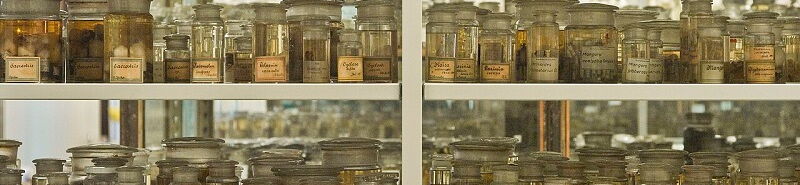
High-quality genomes are an important basis for biological and evolutionary research. However, generating assemblies of high completeness and contiguity requires ideally fresh, flash-frozen samples. The availability of such samples has become a major limitation for biodiversity genomics, in particular for rare or endangered species, or species inhabiting remote regions. On the other hand, museum collections house millions of samples worldwide. While most of these samples do not preserve DNA well, kilobase-sized DNA can be extracted from samples preserved in ethanol. Here we propose that such museum samples can be used to assemble high-quality genomes in conjunction with the new PacBio HiFi sequencing technology, which generates accurate reads of a few kilobases in length. This genomic resource unlocked from museum collections can provide precious insights into the genomic basis of phenotypic differences, phylogeny, biogeography and population history.