

Press releases
The Leibniz-IZW regular publishes press releases on key findings and insights from its research and on events, awards or personalia. The press releases are distributed directly to journalists on our press release distribution mailing list. Press releases are also disseminated through the distribution services Informationsdienst Wissenschaft, AlphaGalileo and EurekAlert. Are you interested in receiving our press releases directly via e-mail? In this case please send us an email to presse@izw-berlin.de.

Abundance of prey species is key to bird diversity in cities
Urbanisation represents a drastic change to natural habitats and poses multiple challenges to many wildlife species, thereby affecting the occurrence and the abundance of many bird species. A team of scientists from the Leibniz Institute for Zoo and Wildlife Research (Leibniz-IZW) and the Technische Universität Berlin (TUB) collaborated to analyse breeding bird data from the Senate of Berlin gathered by citizen scientists. They found that the abundance of invertebrates such as insects or spiders as prey is a key factor affecting bird diversity in the city. The more prey is available, the more diverse the urban bird communities are. This demonstrates the importance of species interactions for explaining urban biodiversity in addition to impacts of anthropogenic disturbance and habitat structure. The results are published in the scientific journal “Diversity and Distributions”.
Read more … Abundance of prey species is key to bird diversity in cities

Scientific consortium Bird10K publishes world's largest genome resource for bird species to date
The international consortium Bird10K aims to produce genome sequences for all known bird species in the world. Now the team of scientists around Prof Andre Franke at the Institute for Clinical Molecular Biology at the University of Kiel (IKMB) has reached a new milestone: In the scientific journal "Nature" they published the largest vertebrate genome project to date with a total of 363 species. Franke's team, led by Dr Marc Höppner from the IKMB, used the expertise and modern technical equipment of the Kiel Genome Centre CCGA for this project. Part of the genome project is the best genome reference to date for the strictly protected white-tailed sea eagle, which was created in cooperation with the Leibniz Institute for Zoo and Wildlife Research (Leibniz-IZW). The genome resource lays the foundation for a large number of research projects on the biology of different species and will also make a significant contribution to their protection.

Specialised omnivores – individual red foxes prefer different foods in the city and the countryside
Foxes are considered to be particularly adaptable and suited to life in large cities. A team of scientists from the Leibniz Institute for Zoo and Wildlife Research (Leibniz-IZW) in cooperation with the Berlin-Brandenburg State Laboratory has now deciphered an important aspect of these adaptations. Using stable isotope analysis, they showed that individual red foxes (Vulpes vulpes) have a much narrower diet than might be expected from their omnivorous habits. The population of country foxes had a much broader diet than their urban conspecifics, whose diet differed little between individuals. The diet of urban and country foxes showed little overlap. This combination of specialisation and flexibility is a key to this omnivore's adaptability, according to a paper published in the scientific journal “Ecology and Evolution”.
Who are your neighbours? Advancing wildlife genomics through the development of molecular methods
A team of scientists from the Leibniz Institute for Zoo and Wildlife Research (Leibniz-IZW), the Australian Museum and the Max Delbrück Center for Molecular Medicine (MDC) report a new method for identifying any genome sequence located next to a known sequence. It is often difficult to precisely determine unknown sequences close to small known fragments. Whole genome sequencing can be a solution, but it’s a very cost intensive approach. In order to find a more efficient technique, the scientists developed Sonication Inverse PCR (SIP): First, DNA is cut into random pieces using ultrasound waves. After DNA fragmentation, long-range inverse PCR is performed followed by long-fragment high-throughput sequencing. SIP can be used to characterise any DNA sequence (near a known sequence) and can be applied across genomics applications within a clinical setting as well as molecular evolutionary analyses. The results are reported in the scientific journal “Methods in Ecology and Evolution”.
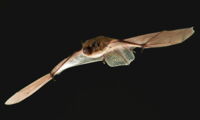
Bats save energy by reducing energetically costly immune functions during seasonal migration
Both seasonal migration and the maintenance and use of an effective immune system come with substantial metabolic costs and are responsible for high levels of oxidative stress. How do animals cope in a situation when energy is limited and both costly body functions are needed? A team of scientists led by the Leibniz Institute for Zoo and Wildlife Research (Leibniz-IZW) investigated whether and how the immune response changes between pre-migration and migration seasons in the Nathusius pipistrelle bat. They confirmed that migratory bats favour the energetically “cheaper” non-cellular (humoral) immunity during an immune challenge and selectively suppress cellular immune responses. Thereby, bats save energy much needed for their annual migration. The results are published in the scientific journal “Scientific Reports”.
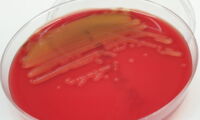
On the trail of novel infectious agents in wildlife: First scientific description of a previously unknown Streptococcus species of Chacoan peccaries
The species richness of zoo and wild animals is reflected in the diversity of infectious agents they harbour. However, our knowledge is sparse and pathogen detection remains challenging. For streptococci, a bacterial family of importance to human and animal health, wildlife research has taken a step forward: A research team led by Kristin Mühldorfer from the Leibniz Institute for Zoo and Wildlife Research (Leibniz-IZW) and Tobias Eisenberg from the Hessian State Laboratory investigated the causes of severe respiratory disease in peccaries and taxonomically characterised a novel Streptococcusspecies (Streptococcus catagoni sp. nov.) based on its phenotypic properties and genetic features. The results, published in the „International Journal of Systematic and Evolutionary Microbiology“, contribute to a better understanding and reliable identification of this novel bacterial species.
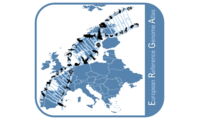
Scientists call for support for European Reference Genome Atlas to decipher the genomes of all European species
Scientists of the Leibniz Institute for Zoo and Wildlife Research (Leibniz-IZW) together with colleagues representing 39 institutions from 17 EU countries have called upon the European Commission to support genomics research as part of the EU Biodiversity Strategy for 2030 in the upcoming Horizon Europe programme. The group proposes to the EU to provide competitive funding for sequencing the genomes of all animals, plants, and microorganisms in Europe (at least 200,000 species) in a Pan-European collaborative effort tentatively named European Reference Genome Atlas (ERGA). This urgent call is intended to foster better understanding, management and restoration of biodiversity and ecosystem services. Scientists, politicians and interested citizens are invited to add their names as signatories to the list in support of ERGA at https://vertebrategenomesproject.org/erga.
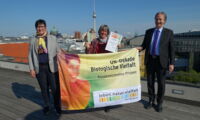
Leibniz-IZW lynx research project receives award from the UN Decade of Biodiversity
The "German Conservation Research Project – Iberian Lynx" of the Leibniz Institute for Zoo and Wildlife Research (Leibniz-IZW) was awarded yesterday the prize of being an official project of the UN Decade of Biodiversity. Prof Christine Wrenzycki (University of Gießen) presented the award. Wrenzycki is deputy chairperson of the scientific advisory board of the Leibniz-IZW. The award is given to exemplary projects that are particularly committed to the conservation of biological diversity.
Read more … Leibniz-IZW lynx research project receives award from the UN Decade of Biodiversity
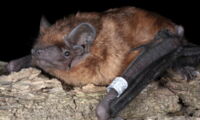
Generational shifts help migratory bats keep pace with global warming
Many animal species are currently changing their distribution range owing to global warming. The underlying mechanisms are still little known, especially in mammals. An international team of scientists led by the Leibniz Institute for Zoo and Wildlife Research (Leibniz-IZW) has now demonstrated that in the common noctule bat, one of the largest European bat species, the colonization of hibernacula progresses from lower to higher latitudes over successive generations of young animals – especially first-year males. Because of their relatively high reproduction rate and the long-distance dispersal of male juveniles, it is probably relatively easy for common noctules to adjust to global warming. For species with lower reproduction rates and a limited migratory potential of the young – the majority of European bat species – the future might not look as favourable when facing continuing global warming. The paper was published in the scientific journal "Biology Letters".
Read more … Generational shifts help migratory bats keep pace with global warming
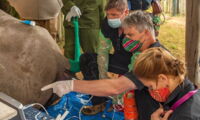
Another lap won in the race against time: Northern white rhino rescue programme resumes work with successful egg harvest
After a hiatus of a few months owing to the global COVID-19 pandemic, the international team of scientists and conservationists continued its ambitious programme to save the northern white rhino from extinction: On August 18, 2020 they harvested ten eggs from the last remaining two individuals, Najin and Fatu, in the third-ever ovum pickup procedure in northern white rhinos, at Ol Pejeta Conservancy in Kenya. With great support from the Kenya Wildlife Service and the Kenyan Ministry of Tourism and Wildlife, the team from the German Leibniz Institute for Zoo & Wildlife Research (Leibniz-IZW) and Czech Safari Park Dvůr Králové overcame substantial challenges to perform this important procedure in such critical times. Preparations for the next steps in the programme – the generation and transfer of embryos – are underway, ensuring that everything is done to make the best possible progress to save the northern white rhino from the brink of extinction.