

Press releases
The Leibniz-IZW regular publishes press releases on key findings and insights from its research and on events, awards or personalia. The press releases are distributed directly to journalists on our press release distribution mailing list. Press releases are also disseminated through the distribution services Informationsdienst Wissenschaft, AlphaGalileo and EurekAlert. Are you interested in receiving our press releases directly via e-mail? In this case please send us an email to presse@izw-berlin.de.

FOUND: Miniature Fanged ‘Deer’ Rediscovered Tiptoeing Through Vietnam’s Coastal Forests
First-ever Photos and Footage of Silver-backed Chevrotain Confirm First Rediscovery of Lost Mammal on Global Wildlife Conservation’s ‘Most Wanted’ List
Read more … FOUND: Miniature Fanged ‘Deer’ Rediscovered Tiptoeing Through Vietnam’s Coastal Forests

In Southeast Asia, illegal hunting is a more immediate threat to wildlife than forest degradation
In Southeast Asia, illegal hunting is a more immediate threat to wildlife than forest degradation
Biodiversity in the lecture hall – Talks at the Leibniz Institute for Zoo and Wildlife Research during the „Berlin Science Week“
The “Berlin Science Week" will take place from November 1 to November 10, 2019 at research institutions in Berlin. The festival brings together top researchers from all over the world with the local science community and the public in Germany’s capital. The Leibniz Institute for Zoo and Wildlife Research (Leibniz-IZW) is participating in the festival with a lecture programme. The lectures on infectious diseases in animals, service dogs for wildlife research and the use of citizen sciences in biodiversity research will take place on November 5, 2019 in the lecture hall of the Leibniz-IZW. Admission is free.
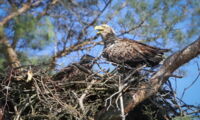
Proximity to paths and roads is a burden for white-tailed sea eagles
The white-tailed sea eagle is known for reacting sensitively to disturbances. However, research into which factors have which effects on the animals and how these impacts influence breeding success has so far only just begun. A research team led by Dr Oliver Krone from the Leibniz Institute for Zoo and Wildlife Research (Leibniz-IZW) has now measured concentrations of the hormone corticosterone and its metabolic products in white-tailed sea eagles in northern Germany and correlated these values with potential causes of “stress”. They found that the levels of corticosterone in the birds' urine are higher the closer a breeding pair's nest is to paths or roads. From this, the scientists derive implications for the management and protection of white-tailed sea eagles, in particular for protection zones around the nests. The study was published in the journal "General and Comparative Endocrinology".
Read more … Proximity to paths and roads is a burden for white-tailed sea eagles

It is not the hairstyle that matters, but the content: hair indicates whether wild animals were "stressed"
While hair analysis has become routine in humans – for example for the detection of prolonged drug or medication abuse – it has been little used in animals to date. Scientists led by Alexandre Azevedo and Katarina Jewgenow of the Leibniz Institute for Zoo and Wildlife Research (Leibniz-IZW) have now demonstrated that the "stress" hormone cortisol is deposited in hair of wild mongooses in Portugal and determined baselines for cortisol in these carnivores. Age, sex and storage time of the samples were reflected in the cortisol values, but not the season or reproductive status of the females. It is now possible to investigate whether different habitats and changed living conditions, such as the return of the Iberian lynx, place a particular burden on the mongooses. The results were recently published in the scientific journal "PLoS ONE".

First ever in-vitro embryos may mark the turn of the tide in the fate of the nearly extinct northern white rhino
For decades the story of the northern white rhinoceros has been a tale of decline. The number of individuals shrank down to only two in 2018, rendering complete extinction as only a matter of time. An international consortium of scientists and conservationists has now achieved a milestone in assisted reproduction that may be a pivotal turning point in the fate of these magnificent animals. Using eggs collected from the two remaining females and frozen sperm from deceased males, they successfully created two northern white rhino embryos. The embryos are now stored in liquid nitrogen to be transferred into a surrogate mother in the near future.

Northern White Rhino Eggs Successfully Fertilized
After successfully harvesting ten eggs from the world’s last two northern white rhinos, Najin and Fatu, on 22 August in Kenya, the international consortium of scientists and conservationists has announced that seven of the ten eggs (four from Fatu and three from Najin) have successfully matured and been artificially inseminated. This was achieved through ICSI (Intra Cytoplasm Sperm Injection) with frozen sperm from two different northern white rhino bulls, Suni and Saut, on Sunday, 25 August. This is the next critical step in hopefully creating viable embryos that can be frozen and later transferred to southern white rhino surrogate mothers.
Read more … Northern White Rhino Eggs Successfully Fertilized

Successful Egg Harvest Breaks New Ground in Saving the Northern White Rhinoceros
There are only two northern white rhinos left worldwide, both of them female. Saving this representative of megafauna from extinction seems impossible under these circumstances, yet an international consortium of scientists and conservationists just completed a procedure that could enable assisted reproduction techniques to do just that. On August 22, 2019, a team of veterinarians successfully harvested eggs from the two females who live in Ol Pejeta Conservancy in Kenya — a procedure that has never been attempted in northern white rhinos before. The eggs will now be artificially inseminated with frozen sperm from a northern white rhino bull, and in the near future the embryo will be transferred to a southern white rhino surrogate mother. The successful procedure was a joint effort by the Leibniz Institute for Zoo and Wildlife Research (Leibniz-IZW) Berlin, Avantea, Dvůr Králové Zoo, Ol Pejeta Conservancy and the Kenya Wildlife Service (KWS).
Read more … Successful Egg Harvest Breaks New Ground in Saving the Northern White Rhinoceros
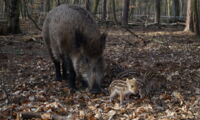
Single event or epidemic? Mating behaviour and movement patterns influence the dynamics of animal diseases
Swine fever, rabies, bird flu – outbreaks of diseases in wildlife populations often also affect farm animals and humans. However, their causes and the dynamics of their spread are often complex and not well understood. A team of scientists led by the Leibniz Institute for Zoo and Wildlife Research (Leibniz-IZW) has now carried out an analysis of long-term data of an outbreak of classical swine fever in wild boars in the German federal state of Mecklenburg-Vorpommern that occurred between 1993 and 2000. The results suggest that non-infected regions have a higher risk of infection due to changes in movement patterns, particularly during the mast and rutting seasons (autumn and winter), and thus highlighting the importance for focusing intervention efforts on specific individuals, seasons and areas in the event of future outbreaks. The findings are published in the “Journal of Animal Ecology”.
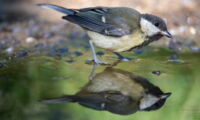
Climate changes faster than animals adapt
Climate change can threaten species and extinctions can impact ecosystem health. It is therefore of vital importance to assess to which degree animals can respond to changing environmental conditions – for example by shifting the timing of breeding – and whether these shifts enable the persistence of populations in the long run. To answer these questions an international team of 64 researchers led by Viktoriia Radchuk, Alexandre Courtiol and Stephanie Kramer-Schadt from the Leibniz Institute for Zoo and Wildlife Research (Leibniz-IZW) evaluated more than 10,000 published scientific studies. The results of their analysis are worrisome: Although animals do commonly respond to climate change, such responses are in general insufficient to cope with the rapid pace of rising temperatures and sometimes go in wrong directions. The results are published in the scientific journal “Nature Communications”.