

Press releases
The Leibniz-IZW regular publishes press releases on key findings and insights from its research and on events, awards or personalia. The press releases are distributed directly to journalists on our press release distribution mailing list. Press releases are also disseminated through the distribution services Informationsdienst Wissenschaft, AlphaGalileo and EurekAlert. Are you interested in receiving our press releases directly via e-mail? In this case please send us an email to presse@izw-berlin.de.

Wind farms in the Black Sea coast region could have a negative impact on bat populations in large parts of Eastern Europe
The Via Pontica, an important migration route for birds in Eastern Europe, runs along the Black Sea coast of Romania and Bulgaria. Bats also use this route. In this region, numerous wind farms have been installed in recent years because of good wind conditions, but there has been little implementation of the legally required measures for the protection of bats. A Romanian research team cooperated with the Leibniz Institute for Zoo and Wildlife Research (Leibniz-IZW) in Berlin to demonstrate that this leads to high death rates of migrating bats and potentially large declines even in populations living far away in other countries. The scientists therefore recommend the widespread introduction of turn-off times during the migration months, which - as the team was able to show in a local wind farm - would massively decrease bat mortality yet produce only a marginal loss in the energy production of the turbines.

BioRescue Consortium performs most successful oocyte collection and embryo creation ever in southern white rhinos in the German Serengeti Park Hodenhagen
In order to prevent the extinction of species such as the northern white rhino, the BioRescue consortium is developing new methods and technologies for conservation. An important part of this work is basic research in cooperation with zoological institutions. This partnership has enabled the BioRescue team to continue working even during the Corona pandemic. On May 26, 2020, the team extracted oocytes from the southern white rhino female "Makena" in Serengeti Park in Hodenhagen, Germany, and then fertilized them in the Avantea laboratory in Italy to create four viable embryos. This was the team's most successful procedure of its kind and nourishes the hope that advanced assisted reproduction technologies (aART) are well established to ensure the survival of the northern white rhino in the near future.
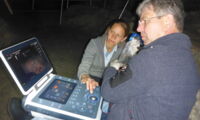
Ultrasound examinations provide new insights into the reproduction of the olm
Summary of an article in the "Volksstimme" (in German).
Only recently, Prof Thomas Hildebrandt (Head of the Department of Reproduction Management at the Leibniz-IZW) – together with Australian colleagues – was able to make a genuine new discovery on reproduction in the animal kingdom: They used ultrasound to show that swamp wallabies develop a new embryo before the birth of the previous offspring and thus show parallel pregnancies at different stages of development. Now, together with his colleague Dr Susanne Holtze, Hildebrandt showed previously unknown reproductive mechanisms also in olms: The fertilisation of the eggs of the rare amphibious cave dwellers takes place inside the female olm and the first developmental steps of the embryo occur already in the fallopian tube.
Read more … Ultrasound examinations provide new insights into the reproduction of the olm
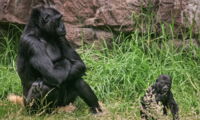
More than the sum of their genes – scientists call for a new perspective for population management of animals in zoos
Reproducing efficiently in captivity is crucial for the survival of many wildlife species, yet reproductive success is often lower than in the wild. Currently, many zoo population management strategies prioritise the genetic diversity of captive populations. Scientists now argue that a broader perspective is required which also includes behaviour, life-history, husbandry and environmental considerations. This would improve breeding success in zoos and the maintenance of the diversity of traits, behaviours, and phenotypes of threatened species. In a paper published recently in the scientific “Journal of Zoo and Aquarium Research” they compare different population management approaches and conclude that prioritizing genetic factors to the exclusion of all others may have detrimental effects: For example, in small groups of unrelated adults, conflicts are likely to be more frequent than in larger groups with relatives present who had the chance to develop differentiated socialisation and learning repertoires.
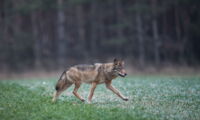
Habitat modelling and estimation of potential territory numbers reveal where wolves may live in Germany
Germany potentially provides many suitable areas for grey wolf territories. This means that wolves may potentially settle down in large parts of the country where they were extinct until around the year 2000. It should be expected that they will disperse through other areas not delineated as suitable as well. These are the results of a study conducted by the Federal Documentation and Consultation Centre on Wolves (DBBW), the Leibniz Institute for Zoo and Wildlife Research (IZW), the Technical University of Berlin, the Humboldt-Universität zu Berlin and the Research Institute for Wildlife Ecology (Vienna). The study was commissioned and published by the Federal Agency for Nature Conservation, Germany.

Conservation research on lynx:
Another piece of the puzzle about the longevity of the corpus luteum in lynxes has been uncovered. Scientists at the Leibniz Institute for Zoo and Wildlife Research (Leibniz-IZW) and the Leibniz Institute for Molecular Pharmacology (Leibniz-FMP) discovered that selected anti-oxidative enzymes, especially the enzyme superoxide dismutase (SOD2), may play an important role to maintain the unusual longevity of the corpus luteum in lynxes. It is highly likely that SOD2 not only detoxifies the reactive oxygen radicals in the cells, but also inhibits programmed cell death. The results were recently published in the scientific journal Scientific Reports of the Nature Group.

Preservation of testicular cells to save endangered feline species
A research team at the German Leibniz Institute for Zoo and Wildlife Research (Leibniz-IZW) developed a method to isolate and cryopreserve testicular cells. This will allow the safekeeping and biobanking of gametes and other cells of the male reproductive tract of threatened or endangered feline species. The findings have been published in the scientific journal "Cryobiology".
Read more … Preservation of testicular cells to save endangered feline species
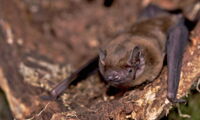
Bats depend on conspecifics when hunting above farmland
Common noctules – one of the largest bat species native to Germany – are searching for their fellows during their hunt for insects above farmland. Scientists from the Leibniz Institute for Zoo and Wildlife Research (Leibniz-IZW) show in a paper published in the journal “Oikos” that bats forage on their own in insect-rich forests, but hunt collectively in groups over insect-poor farmland. They seem to zoom in on places where conspecifics emit echolocations during the capture of insects, an inadvertent clue that reveals high-yielding areas to others. However, “listening” to their hunting companions to find food only works when sufficient numbers of bats forage in the same area. If numbers continue to decline, density could fall below a critical level and joint hunting could become difficult or impossible. This could pose an additional threat to the survival of species such as the Common noctule.
Read more … Bats depend on conspecifics when hunting above farmland
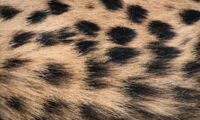
Hair in “stress”: analyse with care
Similar to humans, wild animals’ reaction to disturbance is accompanied by releasing hormones, such as cortisol. To understand the impact of various “stress” factors – for example competition for food, encounters with predators, or changing environmental conditions – on wildlife, scientists first need to determine the baseline levels of relevant hormones for each species. Researchers from the Leibniz Institute for Zoo and Wildlife Research (Leibniz-IZW) now uncovered possible pitfalls of the commonly used hormone analysis method that overestimate concentrations of cortisol and thus lead to overstated conclusions. They investigated whether glucocortiocoid hormones deposited in animal hair can be reliable biomarkers to indicate the impact of disturbances. The source of errors in the commonly used antibody-based enzyme immunoassays (EIA) method is described in a recently published article in the scientific journal “Conservation Physiology”.

Newly confirmed biochemical mechanism in mouse, bat and naked mole rat cells is a key component of the anti-ageing program
Ageing is an inevitable part of life, yet some species are ageing very differently than others, even than very similar ones. Naked mole rats for example, an east African rodent of a size comparable to moles or mice, show a strongly delayed process of ageing and live up to 30 years. Scientists from Russia, Germany and Switzerland now confirmed a mechanism in mouse, bat and naked mole rat cells – a “mild depolarization” of the inner mitochondrial membrane – that is linked to ageing: Mild depolarization regulates the creation of mitochondrial reactive oxygen species (mROS) in cells and is therefore a mechanism of the anti-ageing program. In mice, this mechanism falls apart at the age of 1 year, while in naked mole rats this does not occur until ages of up to 20 years. This newly confirmed mechanism is described in detail in a paper published in the “Proceedings of the National Academy of Sciences of the USA”.