

BioRescue – Fortschrittliche Reproduktionstechnologien zur Rettung von stark gefährdeten Säugetieren wie dem nördlichen Breitmaulnashorn
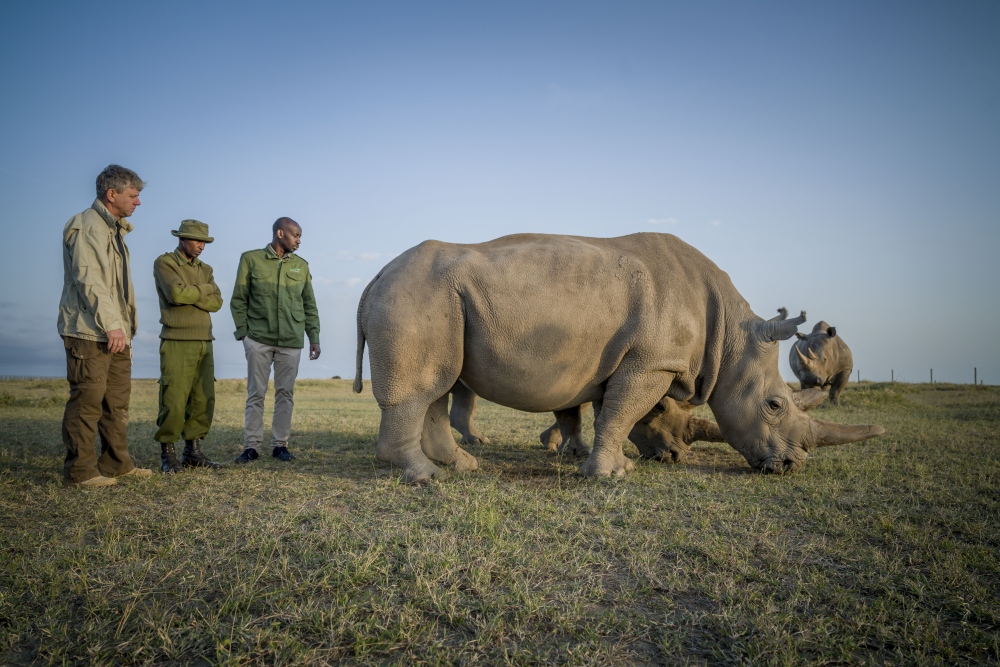
Es gibt nur noch zwei nördliche Breitmaulnashörner auf der Welt, beide sind weiblich. Kann man diese Tiere noch vor dem Aussterben retten? Zusammen mit internationalen Partnern aus Wissenschaft und Artenschutz will das BioRescue-Konsortium durch die Entwicklung fortschrittlicher Methoden der assistierten Reproduktion (aART) und Stammzell-assoziierter Techniken (SCAT) das scheinbar Unmögliche möglich machen.

| Laufzeit: | Phase I: 05/2019 – 04/2022, verlängert bis 11/2022 Phase II: 12/2022 - 11/2025 |
| Drittmittelfinanziert: | ja |
| Beteiligte Abteilung(en): | Abt. Reproduktionsmanagement, Abt. Evolutionsgenetik |
| Projektleitung im Leibniz-IZW: | Thomas Hildebrandt (Abt. Reproduktionsmanagement) |
| Projektbeteiligte im Leibniz-IZW: |
Frank Göritz, Susanne Holtze, Pierfrancesco Biasetti, Vera Zywitza, Charlotte Okolo, Daniel Čižmár (alle: Abt. Reproduktionsmanagement), Steven Seet, Jan Zwilling (alle: Wissenschaftsmanagement), Arne Ludwig (Abt. Evolutionsgenetik) |
| Konsortialpartner: |
Max-Delbrück-Centrum für Molekulare Medizin (MDC), AVANTEA Laboratory of Reproductive Technologies, Safari Park Dvůr Králové, Universita degli studi di Padua, Kyushu University |
| Aktuelle Förderorganisation: | Bundesministerium für Bildung und Forschung (BMBF) (3,0 Mio € Phase I / 2,0 Mio € Phase II), Bundesministerium für Forschung, Technologie und Raumfahrt (BMFTR) (1 Mio € Phase III) |
| Forschungsschwerpunkte: | |
| Verbesserung der Lebensfähigkeit von Wildtierpopulationen | |
| Entwicklung neuer Theorien, Methoden und Werkzeuge |
Fotos von Ami Vitale

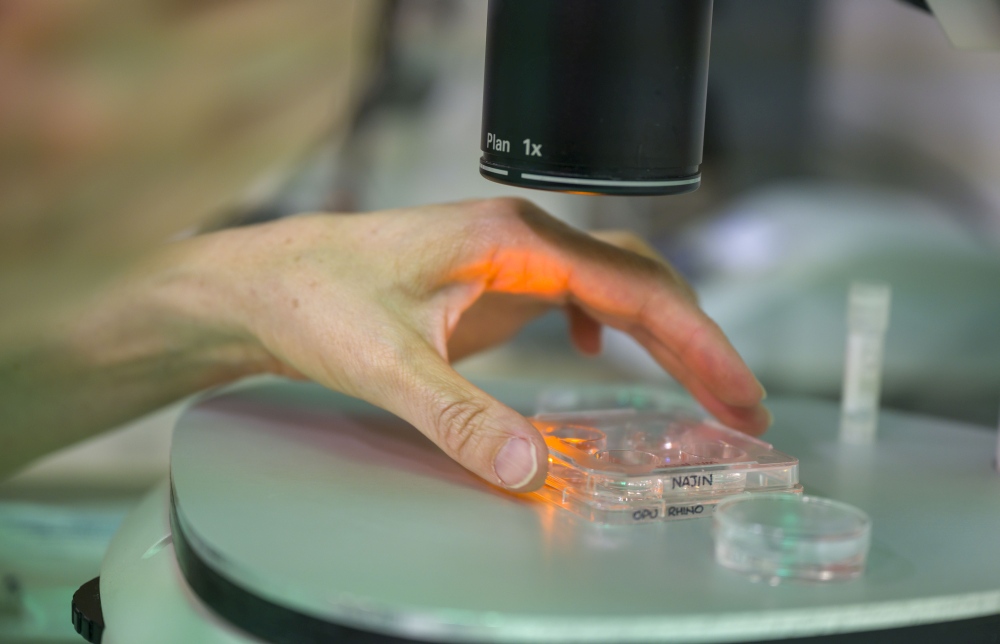
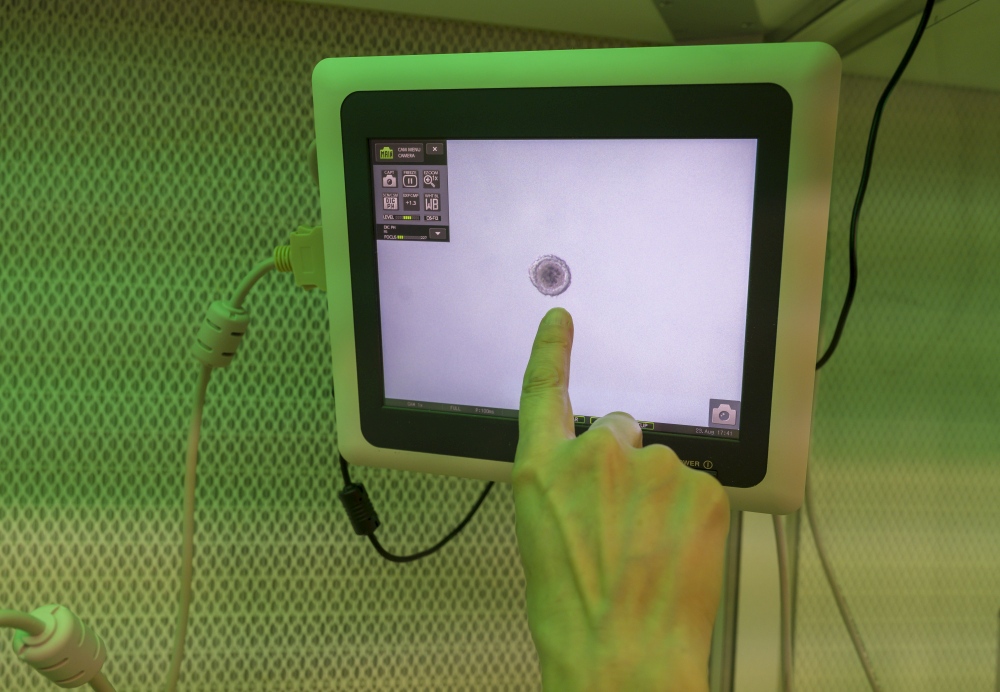

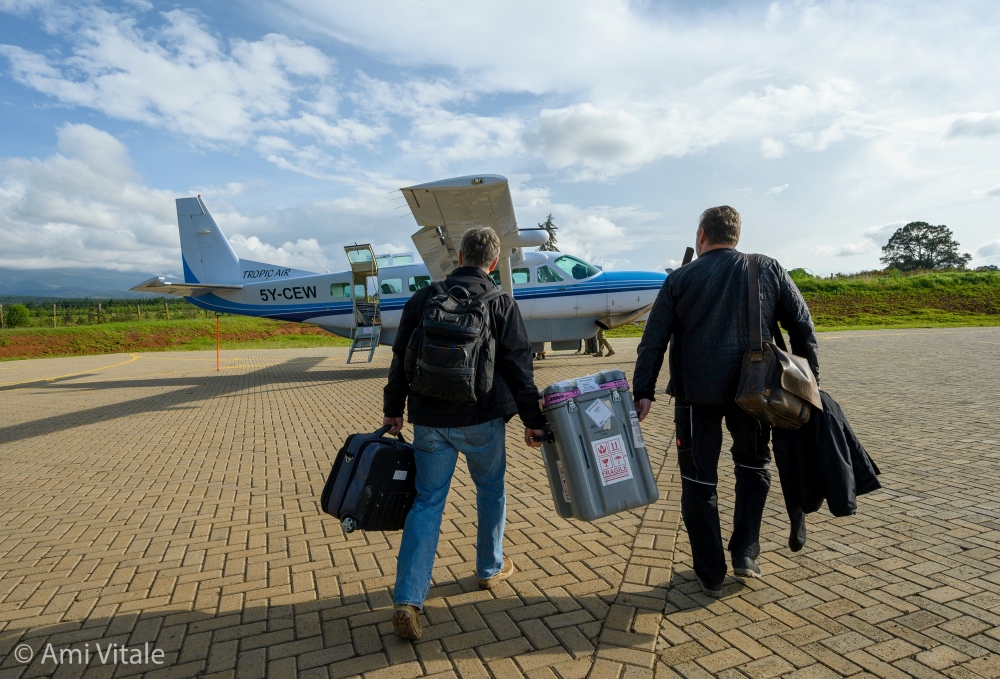
Fotos von Justin Mott
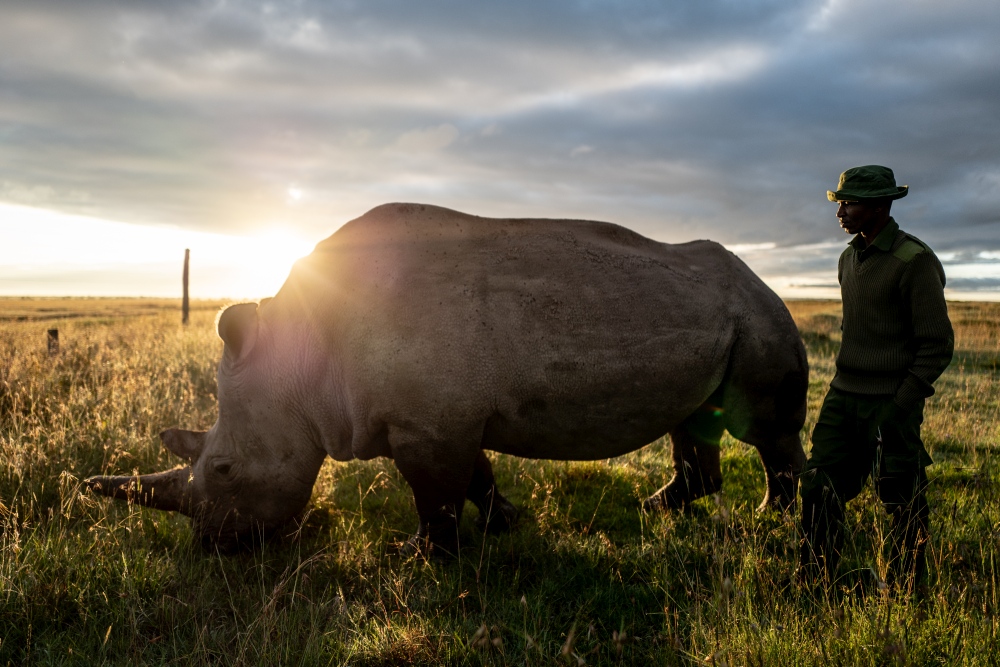
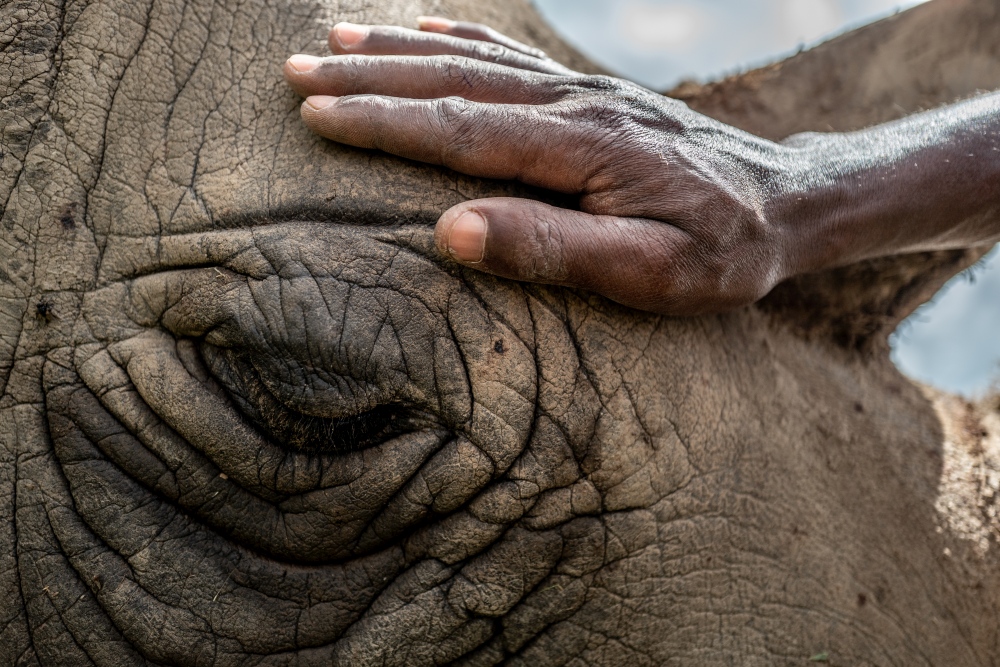
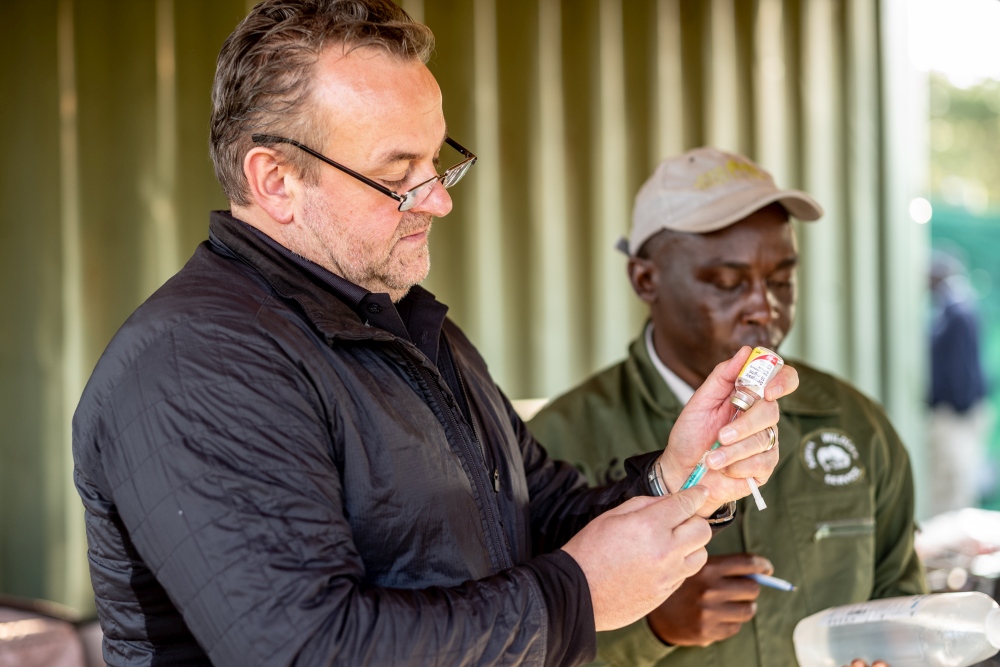

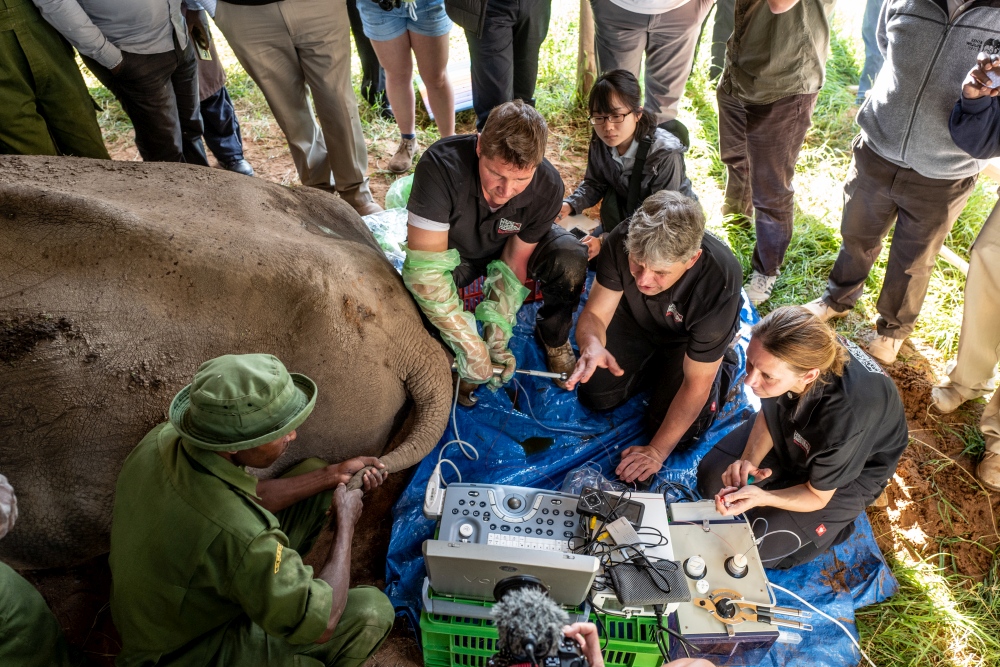
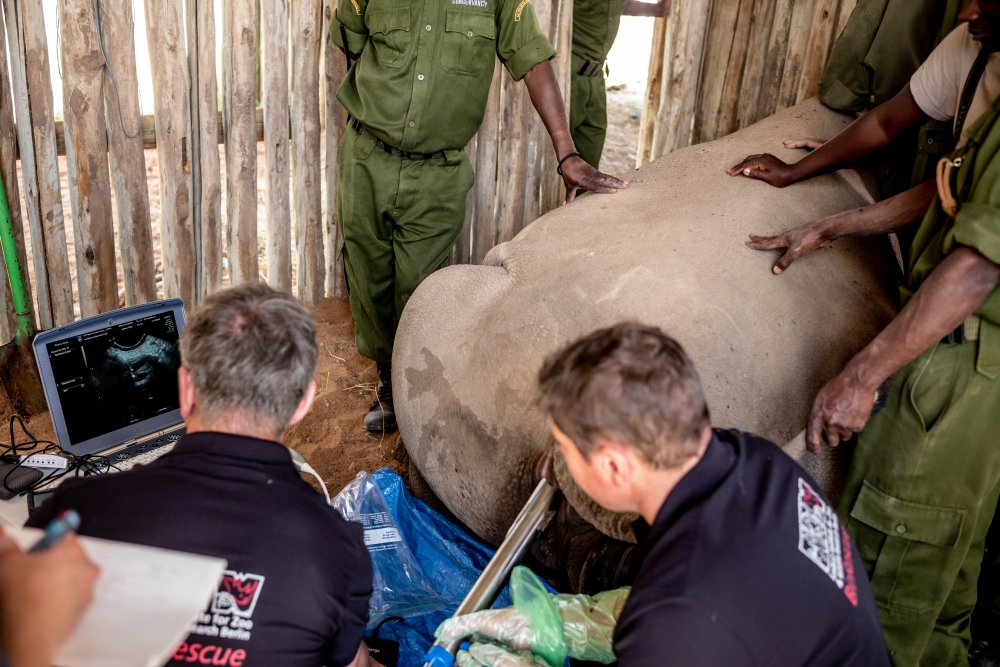

Fotos von Rio Marvin

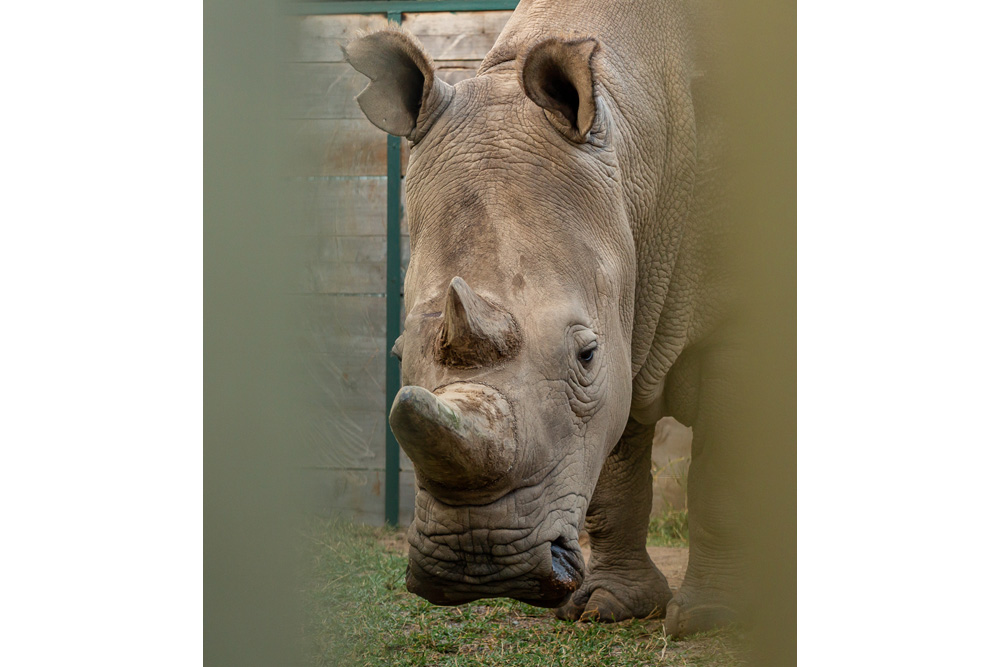
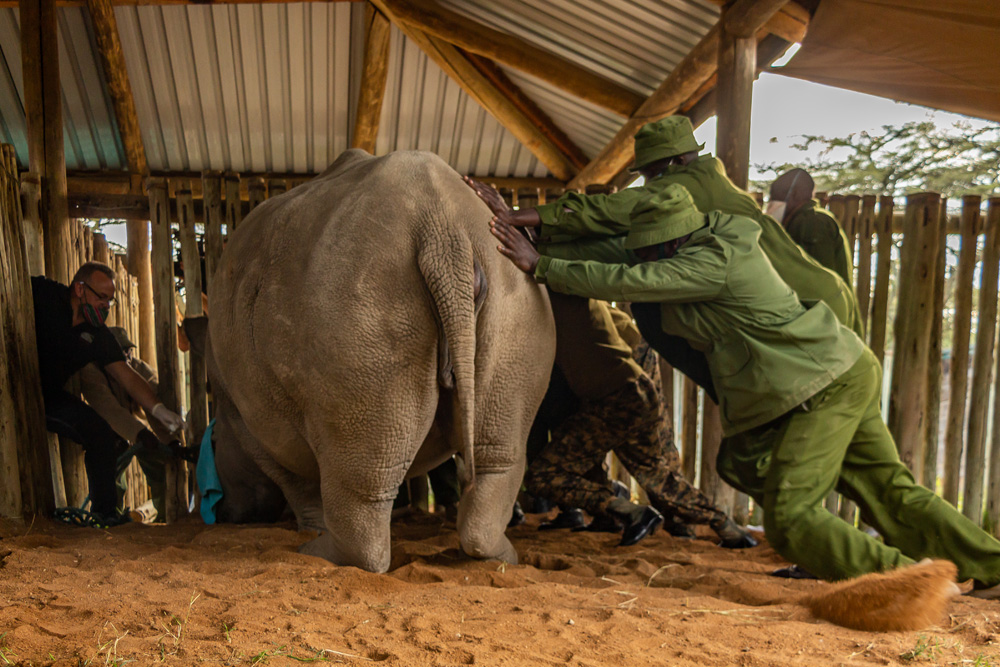
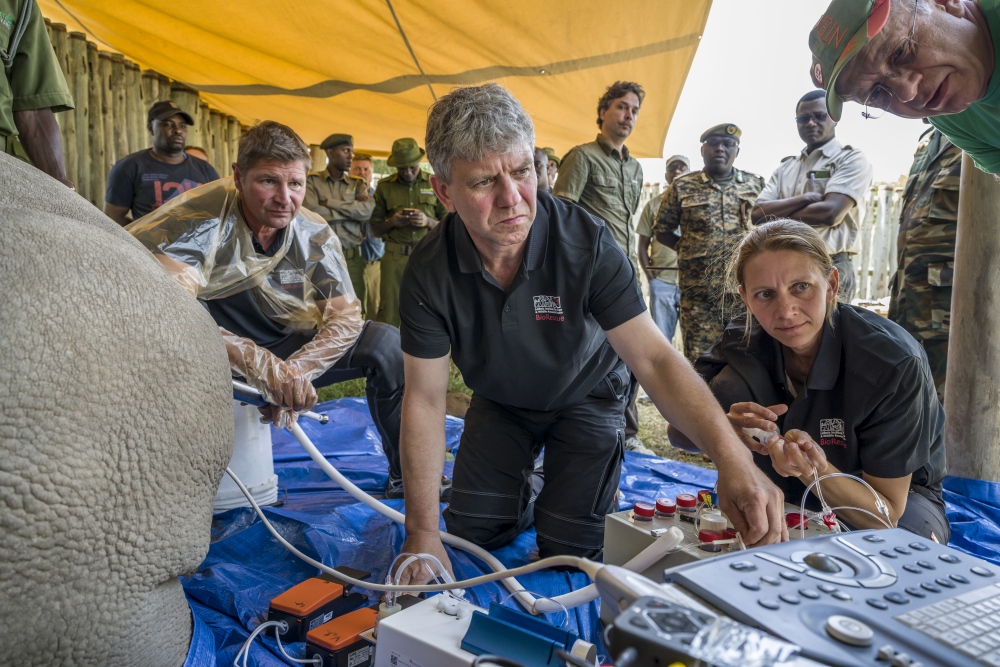
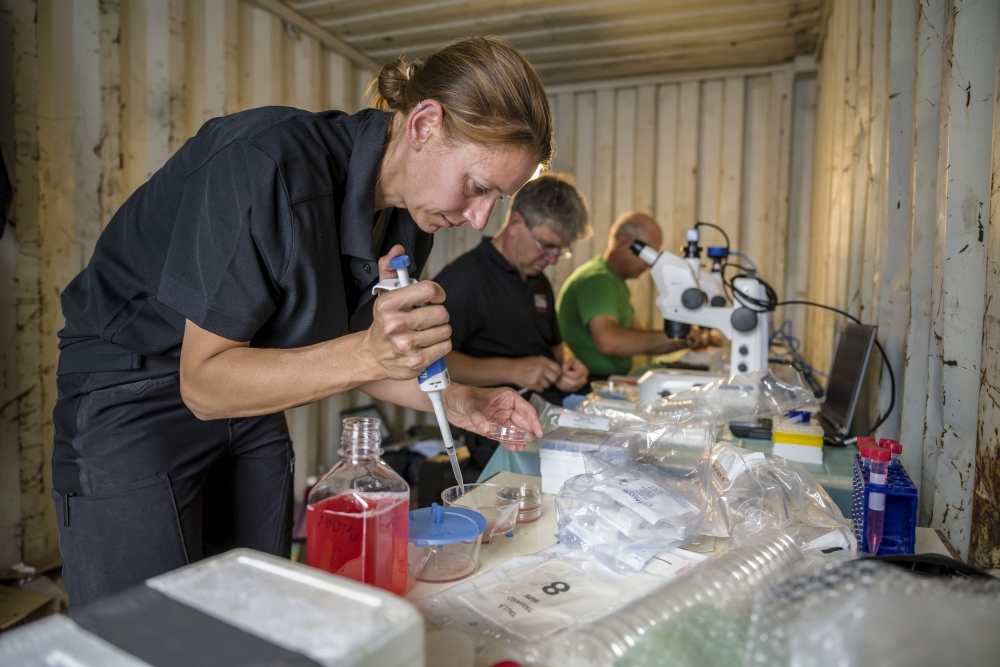
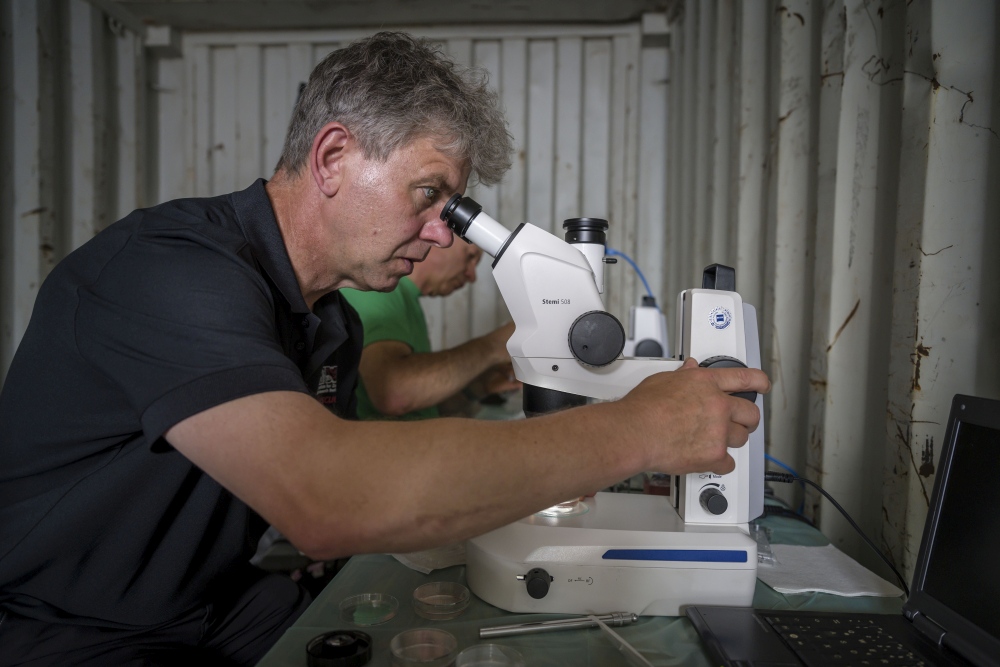
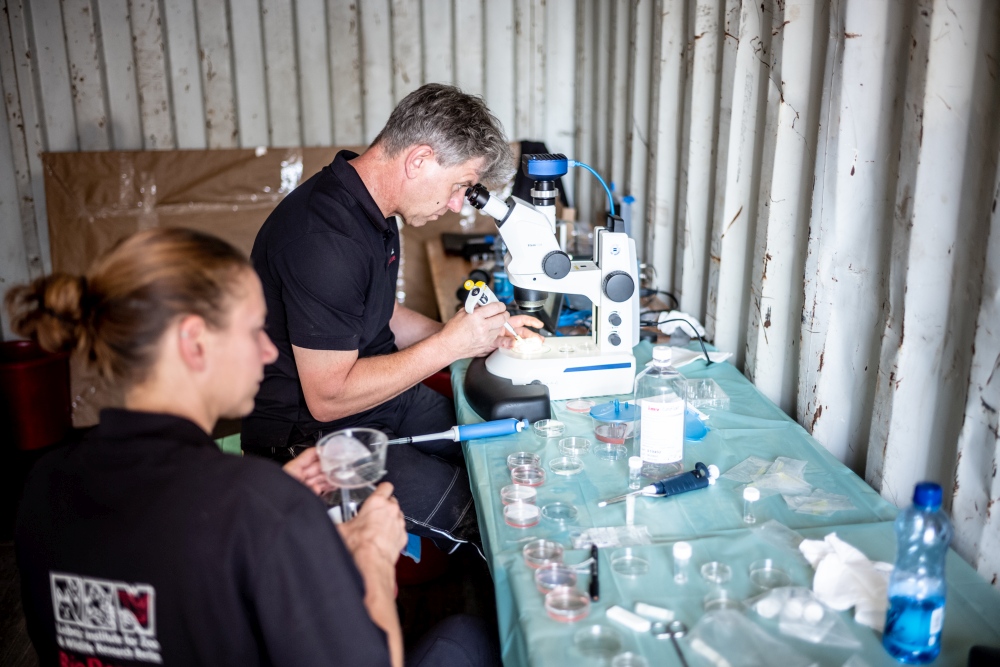
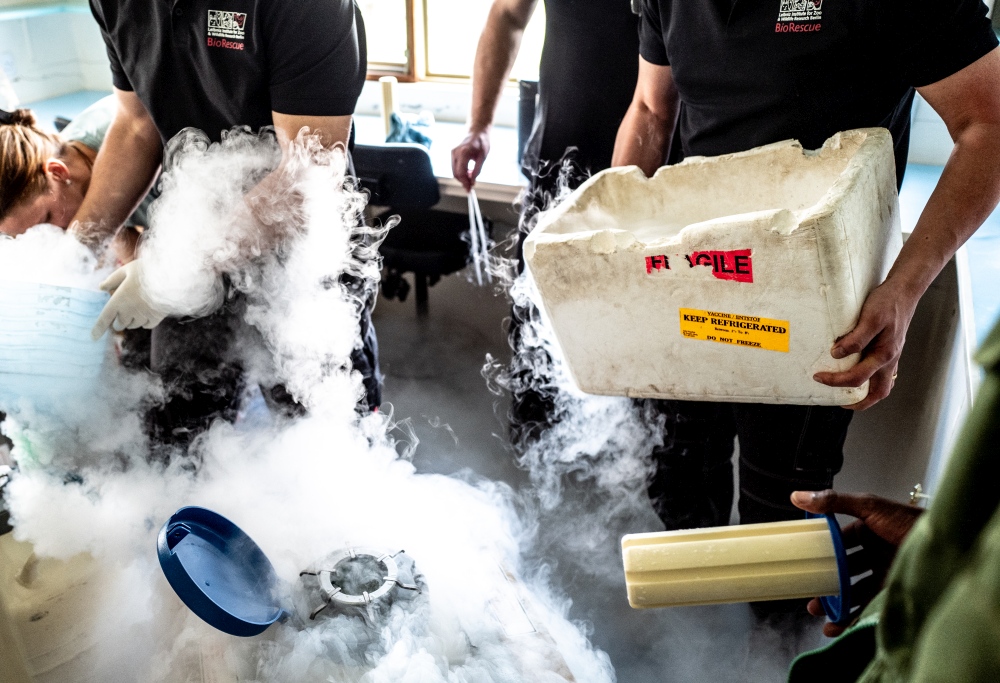
BioRescue verfolgt das ambitionierte Ziel, das nördliche Breitmaulnashorn (Ceratotherium simum cottoni) vor dem endgültigen Aussterben zu bewahren. Diese wichtige Schlüsseltierart ist in freier Wildbahn bereits verschwunden. Durch assistierte Reproduktion konnten aus Eizellen der letzten beiden weiblichen sowie gefrorenen Spermien bereits verstorbener männlicher Individuen bisher insgesamt 39 Embryonen – transferfähige Blastozysten – erzeugt werden.

Derzeit verdichten sich die Hinweise auf ein sechstes, vom Menschen verursachtes Massenaussterben. Aktuell sind 22% aller Säugetiere vom Aussterben bedroht. Angesichts dieses dramatischen Biodiversitätsverlusts reichen klassische Schutzmaßnahmen wie Habitatschutz, Ex-situ-Zucht und Wiederansiedlung allein nicht aus; ergänzende, innovative Strategien sind dringend erforderlich.
Besonders betroffen ist dabei die Familie der Nashörner. Drei der fünf Arten werden von der IUCN als stark gefährdet, eine als gefährdet und das Südliche Breitmaulnashorn als potenziell gefährdet eingestuft, während das nördliche Breitmaulnashorn seit 2008 als in freier Wildbahn ausgestorben gilt. Mit dem Tod des letzten männlichen Tieres, Sudan, im Jahr 2018 wurde die Dringlichkeit zusätzlicher Erhaltungsmaßnahmen erneut deutlich. Die langfristigen Folgen des Verlustes von Schlüsselarten wie dem nördlichen Breitmaulnashorn für das empfindliche Ökosystem Zentralafrikas sind nicht vollständig absehbar. Die Ausrottung eines großen Weidetieres und wichtigen Landschaftsarchitekten wie dem nördlichen Breitmaulnashorn wird jedoch in jedem Fall eine erhebliche Störung oder gar Zerstörung von Elementen des komplexen Ökosystems nach sich ziehen, einen so genannten "Wirbeleffekt". Der Begriff wurde von Bob Lacey (1993) geprägt und steht für den beschleunigten Verlust von Arten und ganzen Artengesellschaften, deren Lebensgeschichte direkt oder indirekt von Schlüsselarten abhängt, die kurz vor dem Aussterben stehen.
Im Jahr 2015 traf sich eine Gruppe von 20 internationalen Wissenschaftlern aus fünf Kontinenten in Wien, um eine neue strategische Roadmap (Saragusty et al., 2016) zur Rettung des nördlichen Breitmaulnashorns zu entwickeln. Der neue Ansatz kombiniert fortschrittliche assistierte Reproduktionstechnologien (aART) und Stammzell-assoziierte Techniken (SCAT). Ersteres beinhaltet die Gewinnung von Eizellen der letzten beiden lebenden weiblichen Tiere - Najin und ihre Tochter Fatu - welche mit kryokonservierten Spermien (Hermes et al., 2018) befruchtet werden (Hildebrandt et al. 2018, 2023). Es existieren noch ca. 300 ml kryokonservierter Spermien von vier verstorben Bullen.
Im zweiten Ansatz werden aus Gewebeproben Fibroblastenkulturen angelegt, in pluripotente Stammzell transformiert und anschließend für die in vitro-Produktion künstlicher Keimzellen verwendet. Vom nördlichen Breitmaulnashorn existieren Fibroblastenzelllinien von 13 Individuen (Korody and Hildebrandt, 2024). Die Herstellung gesunder Embryonen aus natürlichen und künstlichen Keimzellen aus der Zellkultur können eome Erhaltung der genetischen Vielfalt ermöglichen, indem die entstandenen Embryonen für Embryotransfers in nahe verwandte südliche Breitmaulnashörner eingesetzt werden.
Dieser neue Weg des Artenschutzes wird im internationalen Projekt „BioRescue“ maßgeblich weiterentwickelt und praktisch angewandt. Das Projekt konzentriert sich auf die Entwicklung geeigneter Technologien und Protokolle zur Rettung des nördlichen Breitmaulnashorns welche die Möglichkeit eröffnen, eine selbsttragende, genetisch gesunde NWR-Population aufzubauen, die in die Wildnis zurückgebracht werden kann. Über diese Technologien hinaus ist eine ethische Begleitforschung essentiell. Werden durch innovative Forschung die Grenzen des Möglichen im Artenschutz verschoben, entstehen auf der einen Seite neue, bislang nicht ausreichend evaluierte Risiken und auf der anderen Seite ethische Fragestellungen, die das Wohl von einzelnen Individuen, den Gedeih einer ganzen Unterart sowie komplexe sozial-ökologische Fragen zusammenführen. Diese neuen Risiken und ethischen Fragen werden im Projekt „BioRescue“ systematisch analysiert und transparent diskutiert, in den Diskurs werden dabei auch relevante Stakeholder sowie die interessierte Öffentlichkeit eingebunden.
Das Bundesministerium für Bildung und Forschung / Bundesministerium für Forschung, Technologie und Raumfahrt (BMBF / BMFTR) fördert die deutschen Partner des BioRescue-Konsortiums. Am IZW wird das Projekt in der Abteilung für Reproduktionsmanagement durchgeführt, unterstützt durch genetische Analysen der Abteilung für Evolutionsgenetik.
_____________________________________
_____________________________________
_____________________________________
BioRescue in den Medien - ausgewählte aktuelle Beiträge
07.09.2022 | EurekAlert BioRescue consortium announces 5 new embryos created after 10th oocyte collection in northern white rhinoceroses
07.03.2022 | Times From our Correspondent: The last two northern white rhinos are the world’s most precious animals
24.11.2021 | BBC Northern white rhinos: Longleat's rhinos help species avoid extinction
25.10.2021 | Eurasia Review BioRescue Consortium Ceases Egg Harvesting On One Of Two Northern White Rhinos Following Ethical Risk Assessment
22.04.2021 | Phys.org BioRescue creates four new northern white rhino embryos
02.04.2021 | Deutschlandfunk Forschen in Corona-Zeiten - Ein Jahr allein zu Haus?
12.03.2021 | Terra mater How to Save a Species When There Are Only Two Females Left
08.03.2021 | Campus Talks ARD-Alpha Warum muss das Nashorn in die Petrischale?
02.09.2020 | The Independent Covid deals a blow to saving critically endangered Northern White rhino
18.08.2020 | abcNEWS More eggs harvested from last 2 northern white rhinos
18.08.2020 | SWIswissinfo Scientists harvest more eggs from near-extinct northern white rhino
09.08.2020 | SkyNews Scientists try to create first rhino test tube baby to save near-extinct species
06.07.2020 | Mongabay For two rhino species on brink of extinction, it’s collaboration vs. stonewalling
30.06.2020 | Spiegel Online Nashorn-Rettungsversuch: Sie sind die letzten ihrer Art
18.06.2020 | BILD Rettung für die Nashörner, Serengeti Park bei Projekt dabei
17.06.2020 | ScienceDaily Oocyte collection and embryo creation in southern white rhinos
17.06.2020 | Phys.Org Researchers perform southern white rhino oocyte collection and embryo creation
16.06.2020 | RTL Vom Aussterben bedroht: Serengeti-Park Hodenhagen hilft bei Rettung der Breitmaulnashörner
16.06.2020 | la Repubblica Rinoceronte bianco del nord, nuove speranze di salvarlo dall'estinzione
25.04.2020 | Süddeutsche Zeitung Tiere: Forschung zur Rettung von Nashorn-Unterart "auf Eis"
14.04.2020 | BBC Northern white rhinos: The audacious plan that could save a species
14.04.2020 | La Repubblica Kenya, un laboratorio italiano salverà il rinoceronte bianco
18.01.2020 | Spektrum der Wissenschaft Nördliches Breitmaulnashorn: »Künstliche Befruchtung ist die einzige Chance zur Rettung«
17.01.2020 | India Today Only 2 left: Researchers create new embryo made of nearly extinct rhino species
15.01.2020 | Zeit Online Künstliche Befruchtung: Forscher zeugen Embryo von fast ausgestorbener Nashornart
15.01.2020 | Daily Mail Third embryo created in efforts to save northern white rhino
08.12.2019 | BBC These Two Rhinos Are The Last Of Their Kind | Seven Worlds, One Planet | BBC Earth
Ausgewählte Publikationen
2026
Biasetti P, Hildebrandt T, Seet S, Stejskal J, Giardullo P, Göritz F, Holtze S, Galli C, Stastny M & De Mori B. (2026). Perceptions of assisted reproductive technologies in wildlife conservation: Public expectations and ethical implications across three EU countries. PloS one, 21(2), e0342094. https://doi.org/10.1371 journal.pone.0342094
Hildebrandt TB*, Holtze S, Biasetti B, Bohner J, Cizmar D, Colleoni S, de Mori B, Diecke S, Galli C, Hayashi K, Kangethe F, Korody ML, Lekolool I, Ndereeh D, Kariuki L, Lazzari G, Mijele D, Mutisya S, Ngulu S, Omondi P, Seet S, Zywitza V, Stejskal J, Goeritz F. (2026, accepted for publication): De-extinction of the Northern White Rhinoceros (Ceratotherium simum cottoni). Journal of Reproduction and Development.
2025
Biasetti P, Hildebrandt TB, Göritz F, Holtze S, Stejskal J, Galli C, Čižmár D, Simone R, Seet S, de Mori B (2025): Ethics at the edge of extinction: Assisted reproductive technologies (ART) in the conservation of the Northern white rhino. Journal of Agricultural and Environmental Ethics 38, 7. https://doi:10.1007/s10806-024-09943-z
2024
Appeltant R, Hermes R, Holtze S, Hildebrandt TB, Williams SA (2024): Follicle-like and other novel structures found in ovaries of aged white rhinoceroses and their potential impact on oocyte recovery rate. Theriogenology Wild online 4 June 2024, 100096, https://doi.org/10.1016/j.therwi.2024.100096
Biasetti P, Hildebrandt TB, Göritz F, Holtze S, Stejskal J, Galli C, Čižmàr D, Simone R, Seet S, De Mori B (2024): Ethics at the Edge of Extinction: Assisted Reproductive Technologies (ART) in the Conservation of the Northern White Rhino. Journal of Agricultural and Environmental Ethics (2025) 38:7 https://doi.org/10.1007/s10806-024-09943-z
Biasetti P, Mercugliano E, Schrade L, Spiriti MM, Goeritz F, Holtze S, Seet S, Galli C, Stejskal J, Colleoni S, Čižmár D, Simone R, Hildebrandt TB, de Mori B (2024): Ethical assessment of genome resource banking (GRB) in wildlife conservation. CRYOBIOLOGY 117, DOI: 10.1016/j.cryobiol.2024.104956
Hildebrandt TB and Holtze S (2024): Advanced assisted reproduction technologies in endangered mammalian species. Reprod Dom Anim. 2024; 59(Suppl. 3):e14700. https://doi.org/10.1111/rda.14700
Hutchinson A, Appeltant R, Burdon T, Bao Q, Bargaje R, Bodnar A, Chambers S, Comizzoli P, Cook L, Endo Y, Harman B, Hayashi K, Hildebrandt TB, Korody ML, Lakshmipathy U, Loring JF, Munger C, Ng A, Novak B, Onuma M, Ord S, Paris M, Pask A, Pelegri F, Pera M, Phelan R, Rosental B, Ryder OA, Sukparangsi W, Sullivan G, Tay NL, Traylor-Knowles N, Walker S, Weberling A, Whitworth DJ, Williams SA, Wojtusik J, Wu J, Ying Q-L, Zwaka TP, Kohler TN (2024): Advancing stem cell technologies for conservation of wildlife biodiversity. Development (2024) 151, dev203116. https://doi:10.1242/dev.203116
Huijsmans TERG, Courtiol A, Van Soom A, Smits K, Rousset F, Wauters J, Hildebrandt TB (2024): Quantifying maternal investment in mammals using allometry. Communications Biology (2024) 7:475, https://doi.org/10.1038/s42003-024-06165-x
Schrade L, Mah N, Bandrowski A, Chen Y, Dewender J, Diecke S, Hiepen C, Lancaster MA, Marques-Bonet T, Martinez S, Mueller SC, Navara C, Prigione A, Seltmann S, Sochacki J, Sutcliffe MA, Zywitza V, Hildebrandt TB, Kurtz A (2024): A Standardized Nomenclature Design for Systematic Referencing and Identification of Animal Cellular Material. Animals 2024, 14, 1541. https://doi.org/10.3390/ani14111541
Korody M and Hildebrandt TB (2024): Progress towards genetic rescue of the northern white rhinoceros (Ceratotherium simum cottoni). Annu Rev Anim Biosci. 2024 Nov 12. doi: 10.1146/annurev-animal-111523-102158.
de Mori B, Mercugliano E, Biasetti P, Pollastri I, Spiriti MM, Florio D, Andreucci F, Goeritz F, Holtze S, Galli C, Stejskal J, Colleoni S, Lazzari G, Seet S, Zwilling J, Ndeereh D, Lekolool I, Ngulu S, Mijele, D, Cizmar D, Hildebrandt TB. (2024). The ethical assessment of Assisted Reproductive Technologies (ART) in wildlife conservation. Biological Conservation, 290, 110423.
2023
Lázaro J, Costanzo M , Sanaki-Matsumiya M, Girardot C, Hayashi M, Hayashi K, Diecke S, Hildebrandt TB, Lazzari G, Wu J, Petkov S, Behr R, Trivedi V, Matsuda M, Ebisuya M (2023): A stem cell zoo uncovers intracellular scaling of developmental tempo across mammals. Cell Stem Cell 30: 1-12, https://doi.org/10.1016/j.stem.2023.05.014
Hildebrandt TB*, Holtze S*, Colleoni S*, Hermes R, Stejskal J, Lekolool I, Ndeereh D, Omondi P, Kariuki L, Mijele D, Mutisya S, Ngulu S, Diecke S, Hayashi K, Lazzari G, de Mori B, Biasetti P, Quaggio A, Galli C*, Goeritz F*. (2023). In vitro fertilization program in white rhinoceros. Reproduction.166:383-399. https://doi:10.1530/REP-23-0087
Appeltant R, Hermes R, Holtze S, Modina SC, Galli C, Bjarkadottir BD, Adeniran BV, Wei X, Swegen A, Hildebrandt TB, Williams SA (2023): The neonatal southern white rhinoceros ovary contains oogonia in germ cell nests. Communications Biology 6, 1049. https://doi:10.1038/s42003-023-05256-5
2022
Hayashi M, Zywitza V, Naitou Y, Hamazaki N, Goeritz F, Hermes R, Holtze S, Lazzari G, Galli C, Stejskal J, Diecke S, Hildebrandt TB, Hayashi K. (2022). Robust induction of primordial germ cells of white rhinoceros on the brink of extinction. Science Advances 8:eabp9683. https://doi:10.1126/sciadv.abp9683
Biasetti P, Hildebrandt TB, Göritz F, Hermes R, Holtze S, Stejskal J, Galli C, Pollastri I, Muzzo A, Lekolool I, Ndereeh D, Omondi P, Kariuki L, Mijele D, Mutisya S, Ngulu S, de Mori B. (2022). Application of decision tools to ethical analysis in biodiversity conservation. Conserv Biol. e14029. https://doi:10.1111/cobi.14029
Zywitza V, Rusha E, Shaposhnikov D, Ruiz-Orera J, Telugu N, Rishko V, Hayashi M, Michel G, Wittler L, Stejskal J, Holtze S, Göritz F, Hermes R, Wang J, Izsvák Z, Colleoni S, Lazzari G, Galli C, Hildebrandt TB, Hayashi K, Diecke S, Drukker M. (2022). Naïve-like pluripotency to pave the way for saving the northern white rhinoceros from extinction. Sci Rep. 12:3100. https://doi:10.1038/s41598-022-07059-w
Biasetti P, Hildebrandt TB, Göritz F, Hermes R, Holtze S, Stejskal J, Galli C, Pollastri I, Muzzo A, Lekolool I, Ndereeh D, Omondi P, Kariuki L, Mijele D, Mutisya S, Ngulu S, de Mori B (2022). Ethical analysis of the application of assisted reproduction technologies in biodiversity conservation and the case of white rhinoceros (Ceratotherium simum) ovum pick-up procedures. Frontiers in Veterinary Science, 334. https://doi:10.3389/fvets.2022.831675.
Zywitza V, Frahm S, Krüger N, Weise A, Göritz F, Hermes R, Holtze S, Colleoni S, Galli C, Drukker M, Hildebrandt TB, Diecke S (2022): Induced pluripotent stem cells and cerebral organoids from the critically endangered Sumatran rhinoceros. iScience 25:105414. https://doi:10.1016/j.isci.2022.105414
2021
Hildebrandt TB, Hermes R, Goeritz F, Appeltant R, Colleoni S, de Mori B, Diecke S, Drukker M, Galli C, Hayashi K, Lazzari G, Loi P, Payne J, Renfree M, Seet S, Stejskal J, Swegen A, Williams SA, Zainuddin ZZ, Holtze S. (2021). The ART of bringing extinction to a freeze - History and future of species conservation, exemplified by rhinos. Theriogenology. 169:76-88. https://doi:10.1016/j.theriogenology.2021.04.006
Hermes R, Balfanz F, Haderthauer S, Dungl E, Hildebrandt TB, Schwarzenberger F (2021). Case Report: Ovulation Induction in Greater One-Horned Rhinoceros (Rhinoceros unicornis). Frontiers in Veterinary Science, 8.
Biasetti P, de Mori B (2021). The Ethical Matrix as a Tool for Decision-Making Process in Conservation. Frontiers in Environmental Science, 9, 110.
Hayashi K, Galli C, Diecke S., Hildebrandt TB. (2021). Artificially produced gametes in mice, humans and other species. REPROD FERT DEVELOP. 33, 91-101. https://doi:10.1071/RD20265
de Mori B, Spiriti MM, Pollastri I, Normando S, Biasetti P, Florio D, Andreucci F, Colleoni S, Galli C, Göritz F, Hermes R, Holtze S, Lazzari G, Seet S, Zwilling J, Stejskal J, Mutisya S, Ndeereh D, Ngulu S, Vigne R, Hildebrandt TB. (2021). An Ethical Assessment Tool (ETHAS) to Evaluate the Application of Assisted Reproductive Technologies in Mammals’ Conservation: The Case of the Northern White Rhinoceros (Ceratotherium simum cottoni). ANIMALS. 11, 312. https://doi:10.3390/ani11020312
Hildebrandt TB*, Holtze S*, Biasetti P, Colleoni S, de Mori B, Diecke S, Göritz F, Hayashi K, Hayashi M, Hermes R, Kariuki L, Lazzari G, Mijele D, Mutisya S, Ndeereh D, Ngulu S, Seet S, Zwilling J, Zywitza V, Stejskal J, Galli C. (2021). Conservation Research in Times of COVID-19–The Rescue of the Northern White Rhino. J APPL ANIM ETH RES. 20, 1(aop):1-22. https://doi:10.1163/25889567-BJA10009
2014-2020
Hermes R, Göritz F, Wiesner M, Richter N, Mulot B, Alerte V, Smith S, Bouts T, Hildebrandt TB (2020): Parturition in white rhinoceros. THERIOGENOLOGY 156, 181-188. https://doi:org/10.1016/j.theriogenology.2020.06.035
Hildebrandt TB*, Hermes R*, Colleoni S, Diecke S, Holtze S, Renfree MB, Stejskal J, Hayashi K, Drukker M, Loi P, Göritz F, Lazzari G, Galli C (2018): Embryos and embryonic stem cells from the white rhinoceros. NAT COMMUN 9, 2589. https://doi:10.1038/s41467-018-04959-2
Hermes R, Hildebrandt TB, Göritz F (2018): Cryopreservation in rhinoceros - setting a new benchmark for sperm cryosurvival. PLOS ONE 13, e0200154. https://doi:10.1371/journal.pone.0200154
Saragusty J, Diecke S, Drukker M, Durrant B, Ben-Nun I, Galli C, Göritz F, Hayashi K, Hermes R, Holtze S, Johnson S, Lazzari G, Loi P, Loring JF, Okita K, Renfree MB, Seet S, Voracek T, Stejskal J, Ryder OA, Hildebrandt TB (2016): Rewinding the process of mammalian extinction. ZOO BIOL 35, 280-292. https://doi:10.1002/zoo.21284
Saragusty J, Osmers J-H, Hildebrandt TB (2016): Controlled ice nucleation - is it really needed for large-volume sperm cryopreservation? THERIOGENOLOGY 85, 1328-1333. https://doi:10.1016/j.theriogenology.2015.12.019
Hermes R, Schwarzenberger F, Göritz F, Oh S, Fernandes T, Bernardino R, Leclerc A, Greunz E, Mathew A, Forsyth S, Saragusty J, Hildebrandt TB (2016): Ovarian down regulation by GnRF vaccination decreases reproductive tract tumour size in female white and greater one-horned rhinoceroces. PLOS ONE 11, e0157963. https://doi:10.1371/journal.pone.0157963
Arav A, Saragusty J (2016): Directional freezing of sperm and associated derived technologies. ANIM REPROD SCI 169, 6-13. https://doi:10.1016/j.anireprosci.2016.02.007
Prieto MT, Sanchez-Calabuig MJ, Hildebrandt TB, Santiago-Moreno J, Saragusty J (2014): Sperm cryopreservation in wild animals. EUR J WILDL RES 60, 851-864. https://doi:10.1007/s10344-014-0858-4
Galateanu G, Hermes R, Saragusty J, Göritz F, Potier R, Mulot B, Maillot A, Etienne P, Bernardino R, Fernandes T, Mews J, Hildebrandt TB (2014): Rhinoceros Feet Step Out of a Rule-of-Thumb: A Wildlife Imaging Pioneering Approach of Synchronized Computed Tomography-Digital Radiography. PLOS ONE 9, e100415. https://doi:10.1371/journal.pone.0100415
Arav A, Saragusty J (2014): Directional freezing of spermatozoa and embryos. REPROD FERTIL DEV 26, 83-90. https://doi:10.1071/Rd13295
Bücher und Kapitel
Biasetti P. (2026). Conservation Ethics - The Challenges of Preserving Nature. Routhledge Taylor and Francis Group. ISBN 9781032700113.
Balfour D, Hillman-Smith K, Prins HHT, Hildebrandt TB, Stejskal J, Holtze S, Rookmaaker K, Ferreira SM (2025): White Rhino: Contrasting Conservation Outcomes of Two Subspecies. In: Rhinos of the World - Ecology, Conservation and Management. (Eds.) Melletti M, Talukdar B, Balfour D, Springer Nature Switzerland 199-235, ISBN: 978-3-031-67168-5 / 978-3-031-67169-2.
Hermes R, Hildebrandt TB (2022): Parturition in rhinoceros. In: Miller E, Lamberski N, Calle, P (eds), Fowler’s zoo and wild animal medicine, 10th Edition. W.B. Saunders, Philadelphia, USA.