

Dr. Konstantin Börner
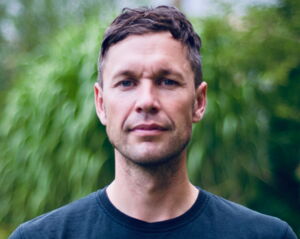
Wissenschaftlicher Mitarbeiter
Abteilung für Ökologische Dynamik
Kurzer Lebenslauf
- seit 2012 - heute: Mitarbeiter Leibniz Institut für Zoo- und Wildtierforschung
- 2008-2014: Dissertation / Humboldt-Universität zu Berlin
- 2006-2008: wissenschaftlicher Mitarbeiter / Humboldt-Universität zu Berlin
- 2006: Diplom Biologie und Agrarwissenschaft Humboldt-Universität Berlin
- 2001: studentisches Praktikum am IZW
Krankeitsfrühwarnsystem (2025-2027)
KI-unterstützte kamerabasierte Systemlösung zur Früherkennung von Wildtierkrankheiten
https://wildlifepro.de/wws-wildlife-disease-warning-system/
Smartfeeder (seit 07/2022)
Entwicklung eines modularen und KI-basierten Automaten zur artspezifischen Verabreichung tiermedizinischer Präparate zur Immunisierung und pharmakologischen Fertilitätskontrolle heimischer Wildtiere
Populationsgefährdungsanalyse für die Art Wolf
Grundlage für die Ableitung des Referenzwertes für die günstige Gesamtpopulation gemäß Anhang II und IV der FFH-Richtlinie (2020–2022)
WTimpact – Citizen Science als Instrument für den Wissenstransfer (2017-2021)
Urbane Wildtierökologie: Wie reagieren Tiere auf neuartige Umwelten? (2017-2020)
- Entwicklung innovativer, technologie- und KI-basierter Lösungen für Mensch-Wildtier- und Umweltkonflikte
- Stadtökologie und Urbanisierung von Wildtierpopulationen
- Lebenslaufstrategien, Populationsdynamik und Anpassungsfähigkeit heimischer Wildtiere
Börner K. (2026). Bien chasser le chevreuil. Dans le respect de sa biologie. Éditions du Gerfaut, Paris, 160 S.
Greving H., [...] Börner K, [...] (2026). Who Engages in Citizen Science Projects on Urban Wildlife Ecology? Findings on Participant Groups from Cluster Analyses. Citizen Science: Theory and Practice, 11(1): 12, pp. 1–13. DOI: https://doi.org/10.5334/cstp.910
Bruckermann T., [...] Börner K, [...] (2026). Attitudes and motivation influence how participants engage in different scientific activities in the online community of a citizen science project. Behaviour & Information Technology. Vorzeitige Online-Publikation. https://doi.org/10.1080/0144929X.2026.2641601
Greving H., ... Börner K, [...] (2026). The influence of psychological ownership on pride in a Citizen Science project on wildlife ecology. PLoS ONE, 21(4), Artikel e0345321. https://doi.org/10.1371/journal.pone.0345321
Jonas Stiegler et al. Nature Communications, Vol 15, Article nr 8079 (2024).
Greving, H., Bruckermann, T., Schumann, A., Stillfried, M., Börner K, [...] (2024). I’m proud of my project! The influence of psychological ownership on pride in a Citizen Science project on wildlife ecology. Vorabveröffentlichung online. https://doi.org/10.23668/psycharchives.14144
Kramer-Schadt S, Planillo A, Landgraf C, Osterburg C., Börner K, [...] (2024): Populationsgefährdungsanalyse für die Art Wolf (Anhang II und IV FFH-Richtlinie) - Grundlage für die Ableitung des Referenzwertes
für die günstige Gesamtpopulation Ergebnisse des Forschungs- und Entwicklungsvorhabens (FKZ 3521 83 1300). In BfN Schriftenreihen 715.
Bruckermann T, ... Börner K, [...] (2023): Scientific reasoning skills predict topic‐specific knowledge after participation in a citizen science project on urban wildlife ecology. J RES SCI TEACH 60, 1915–1941. doi:10.1002/tea.21835
Greving H, Bruckermann T, Schumann A, Stillfried M, Börner K, Hagen R, Kimmig SE, Brandt M, Kimmerle J (2023): Attitudes toward engagement in citizen science increase self‐related, ecology‐related, and motivation‐related outcomes in an urban wildlife project. BIOSCIENCE 73, 206–219. doi:10.1093/biosci/biad003
Grabow M, Louvrier JLP, Planillo A, Kiefer S, Drenske S, Börner K, Stillfried M, Hagen R, Kimmig S, Straka TM, Kramer‐Schadt S (2022): Data‐integration of opportunistic species observations into hierarchical modeling frameworks improves spatial predictions for urban red squirrels. FRONT ECOL EVOL 10, 881247. doi:10.3389/fevo.2022.881247
Louvrier JLP, Planillo A, Stillfried M, Hagen R, Börner K, Kimmig S, Ortmann S, Schumann A, Brandt M, Kramer‐Schadt S (2022): Spatiotemporal interactions of a novel mesocarnivore community in an urban environment before and during SARS‐CoV‐2 lockdown. J ANIM ECOL 91, 367–380. doi:10.1111/1365-2656.13635
Kimmig SE, Beninde J, Brandt M, Schleimer A, Kramer‐Schadt S, Hofer H, Börner K et al. (2020): Beyond the landscape: Resistance modelling infers physical and behavioural gene flow barriers to a mobile carnivore across a metropolitan area. MOL ECOL 29, 466–484. doi:10.1111/mec.15345
Gras P, (2018): Landscape Structures Affect Risk of Canine Distemper in Urban Wildlife. FRONT ECOL EVOL 6, 136. doi:10.3389/fevo.2018.00136
Börner K, Arnold, J. (2017): Flexible soziale Organisation und das Gruppenleben des Rotfuchses (Vulpes vulpes). BEITR JAGD- & WILDFORSCH 42: 263-270.
Stillfried M, et al. (2017): Secrets of success in a landscape of fear: Urban wild boar adjust risk perception and tolerate disturbance. FRONT ECOL EVOL 5, 157. doi:10.3389/fevo.2017.00157
Stillfried M, et al. (2016): Do cities represent sources, sinks or isolated islands for urban wild boar population structure? J APPL ECOL 54(1), 272-281. doi:10.1111/1365-2664.12756
Mouchantat S, et al. (2015): A broad spectrum screening of Schmallenberg virus antibodies in wildlife animals in Germany. VET RES 46, 99. doi:10.1186/s13567-015-0232